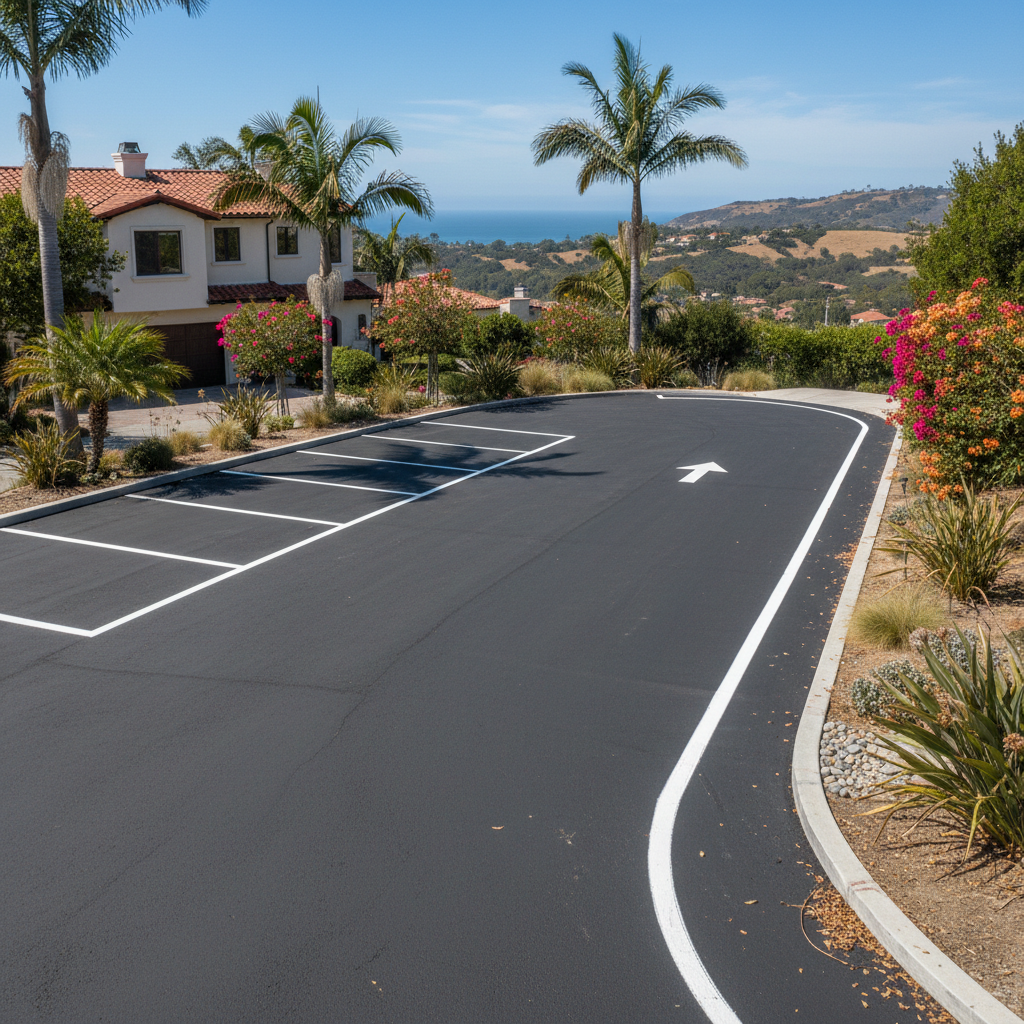
So, you think striping your asphalt is just a quick, simple job? Think again, especially here in Laguna Beach. Our local weather really dictates when and how we put down those sharp lines. Understanding these seasonal quirks can save you a real headache and protect your investment in the long run.
I've been in this business long enough to tell you: timing is absolutely everything for asphalt striping. You want those lines to stick around, right? That means keeping a close eye on the weather, not just today, but yesterday and tomorrow too. It's more than just painting; it's about making sure the paint grabs hold, cures correctly, and stands up to our unique coastal conditions.
When's the Best Time for Striping?
Here in Southern California, we're pretty lucky — we get a much longer window for asphalt work than folks in colder places. You've got flexibility for many maintenance tasks year-round, but for striping, spring and fall are usually your safest bets. These seasons generally bring the most consistent conditions: moderate temperatures and lower humidity.
Specifically, we're looking for daytime temperatures between 50°F and 90°F. For the paint to bond well and cure properly, the temperature shouldn't dip below 40°F overnight. This sweet spot really lets the paint set evenly and grab onto the asphalt surface. If you're planning a bigger project that includes sealcoating and striping, it makes sense to do them together during these warmer, drier periods.
Now, summer might seem perfect because it's hot and dry, but extreme heat can actually make the paint dry too fast, which can cause problems during application. Plus, the intense UV exposure we get here in Laguna Beach speeds up fading. So, picking the right time really helps your fresh lines last longer.
Weather Conditions That Can Mess Things Up
You might figure a little drizzle won't hurt, but when it comes to striping, dry pavement is the golden rule. We need the surface to be dry and no rain in the forecast for at least 4-8 hours after we put the paint down. If rain hits uncured paint, well, we're looking at a do-over, and nobody wants that. That's why we're always glued to the forecast and sometimes have to reschedule if Mother Nature isn't playing nice.
Humidity is another factor. It's not as big a deal in coastal Southern California as in some other places, but high humidity can definitely slow down drying times. The paint cures as it dries, and if there's too much moisture in the air, that evaporation process just takes longer. Wind also plays a part; too much wind can mess with how evenly the spray goes on.
Even the ground temperature matters, believe it or not. If the asphalt surface is too cold, the paint won't dry correctly. In the early morning, especially in shaded spots, the ground can be a lot cooler than the air. That's why we might sometimes start a bit later in the day, just to give the sun a chance to warm up the pavement.
Keeping Your Investment Looking Good All Year
Once those lines are painted, you want them to stay sharp for as long as possible. Here’s what I recommend:
- Check Things Regularly: Walk your property often. Look for any signs of fading, cracking, or peeling. When lines become tough to see, especially from 50-100 feet away, it's time to start thinking about restriping. Faded markings aren't just ugly; they can be a safety hazard and even a liability, you know?
- Keep it Clean: Dirt, oil, and debris can really wear down striping over time. Keep your asphalt clean with regular sweeping and occasional pressure washing. This also helps the paint stick better when it's time for a refresh.
- Fix Repairs Fast: Small cracks can quickly turn into big problems. Water seeping into cracks can undermine the asphalt, which then impacts the striping. Seal any cracks as soon as you spot them. This is super important before our rainy season hits, usually from November to March.
- Sealcoating: This is a huge one for overall asphalt health, and it really goes hand-in-hand with striping. Sealcoating protects your asphalt from UV damage, water, and oil. After a fresh sealcoat, you'll need new striping, but it’s definitely worth it. Most California parking lots need restriping every 18-24 months, but with good maintenance, you might stretch that to 24-30 months, especially in our mild coastal climate. High-traffic areas, though, might need it more often, sometimes every 12-18 months.
- Watch Out for Salt Air: Living right on the coast means our asphalt battles salt air. This can speed up oxidation, so a good sealcoat is even more critical here to prevent pitting and early wear.
At Aim High Paving, we're all about giving you durable, visible striping that truly lasts. We know the ins and outs of working with Laguna Beach's climate, from the constant sunshine to those occasional heavy rains that can cause flooding in low-lying areas like parts of Laguna Canyon. We'll make sure your property's lines are clear, compliant, and looking great for years to come. Don't hesitate to reach out if you have questions or need us to take a look.